You Signed the Trust. Up to 90% Still Fail. Yours Probably Did Too — And Probate Is Waiting to Take Thousands.
The will is signed. The trust exists. But if someone had to follow your instructions tomorrow, would the house, accounts, and beneficiary forms actually point where you think they do — or would the courts and delays take over?
You did the “responsible” thing.
You made the appointment. You answered the questionnaire. You initialed the sticky tabs. You wrote a check. Then you put the folder in a drawer and told yourself: It’s handled.
The brutal truth is what happened after that appointment — or what never happened at all. Signing is not funding. And an unfunded trust is just expensive paper.
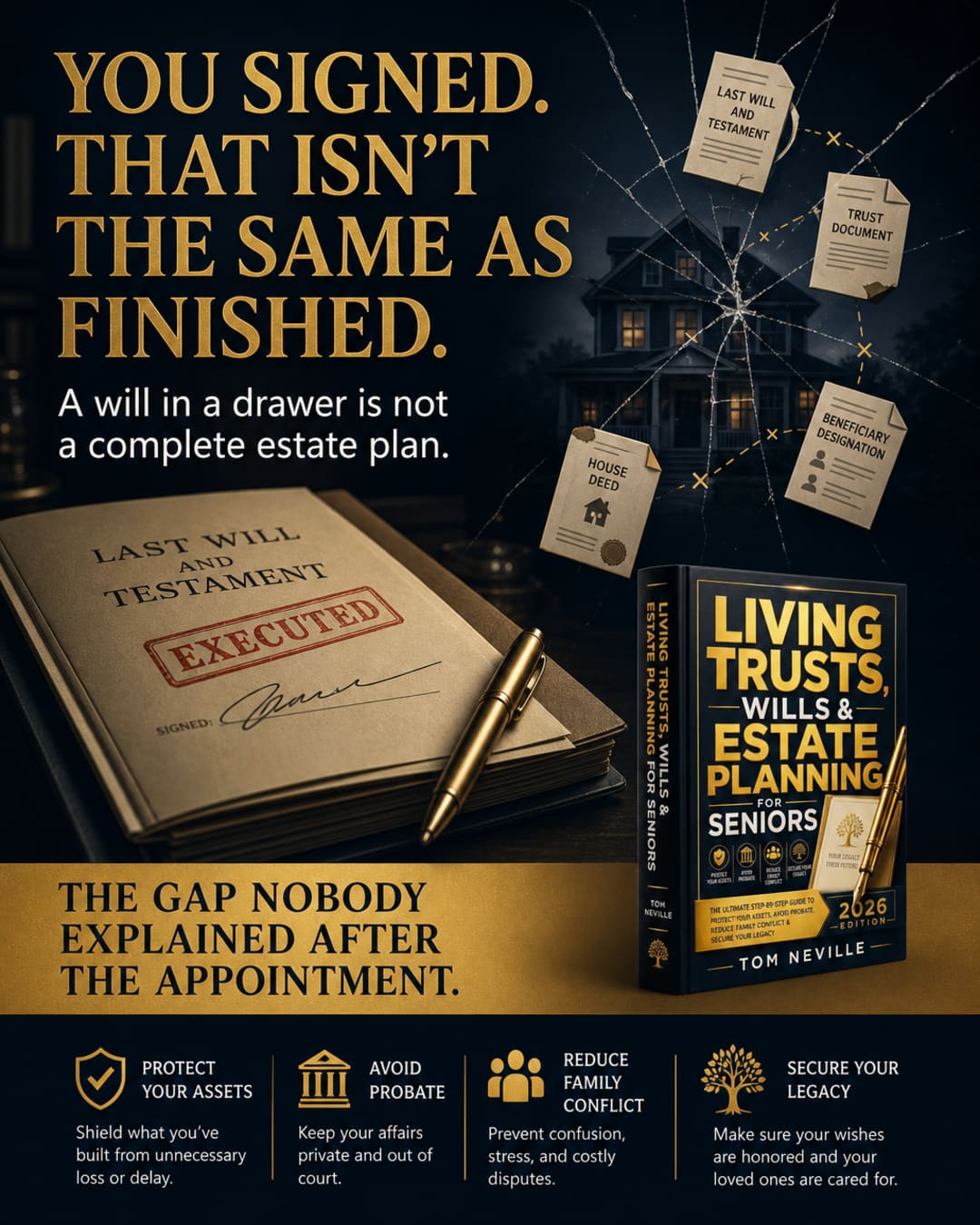
Signing the papers is not the same as finishing the plan — and unfinished plans cost families real money
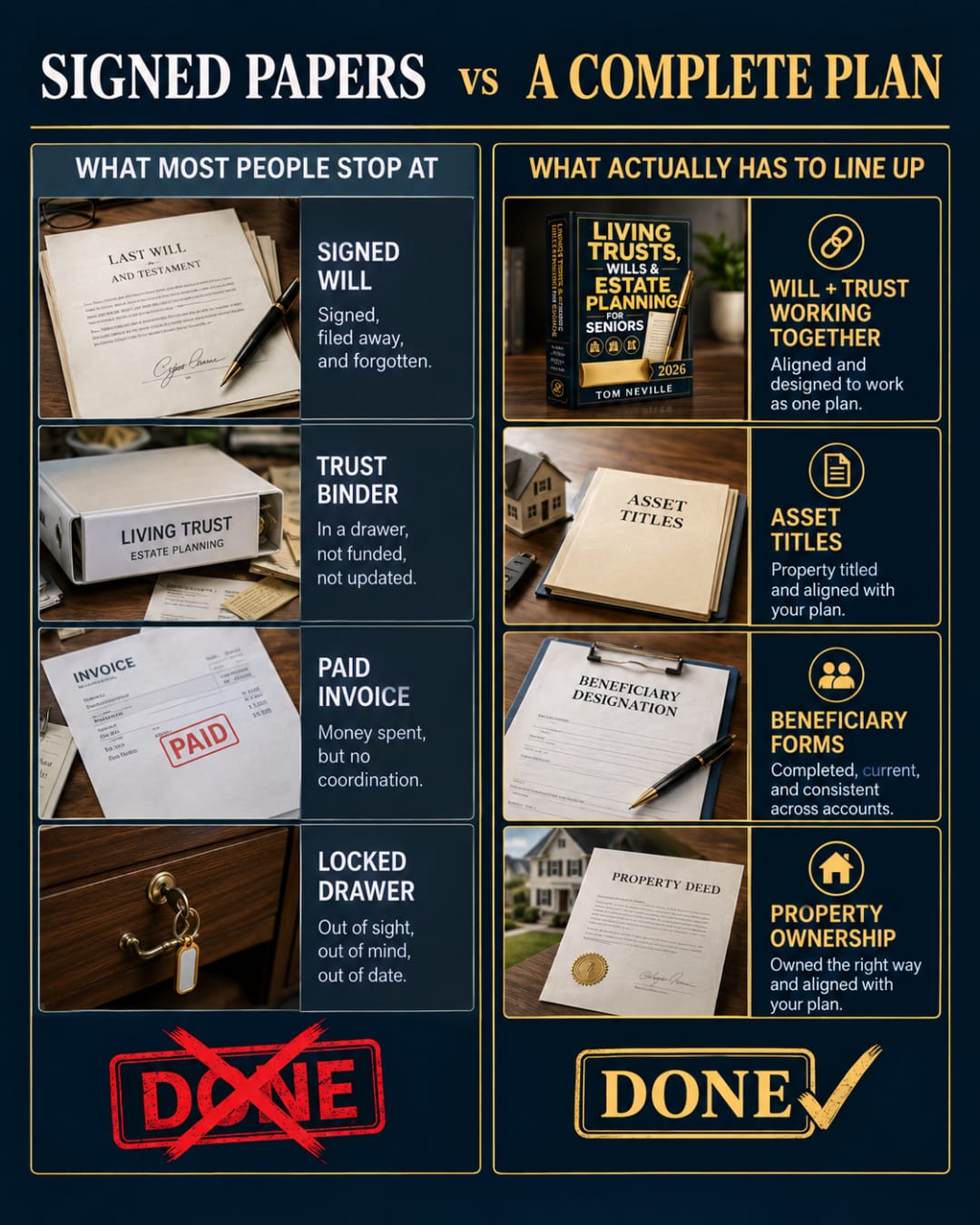
The document in the folder records the plan you intended. The deed, account registrations, and beneficiary forms may determine how individual assets actually transfer. Those records do not automatically update themselves when you sign a trust. Leave them misaligned and the plan collapses when someone has to execute it.
Think of four separate instructions. Your will generally governs property passing through your estate. Your living trust governs assets properly held under its terms. Beneficiary designations can send retirement and insurance proceeds directly to a named recipient. And the deed to a house establishes its legal ownership. One document does not automatically override every other one — and mismatches trigger probate, delays, and fights.
That is the real test of completeness: not the thickness of your binder, but whether these instructions work together. Is the house titled as intended? Which accounts name beneficiaries? Have any of those details changed since you signed? If you cannot answer, there is something worth examining — even if the paperwork itself was professionally prepared. Incomplete funding is the #1 reason living trusts fail to avoid probate.
Creating a living trust is only half the job — funding it is the part up to 90% of people miss (and it costs thousands)
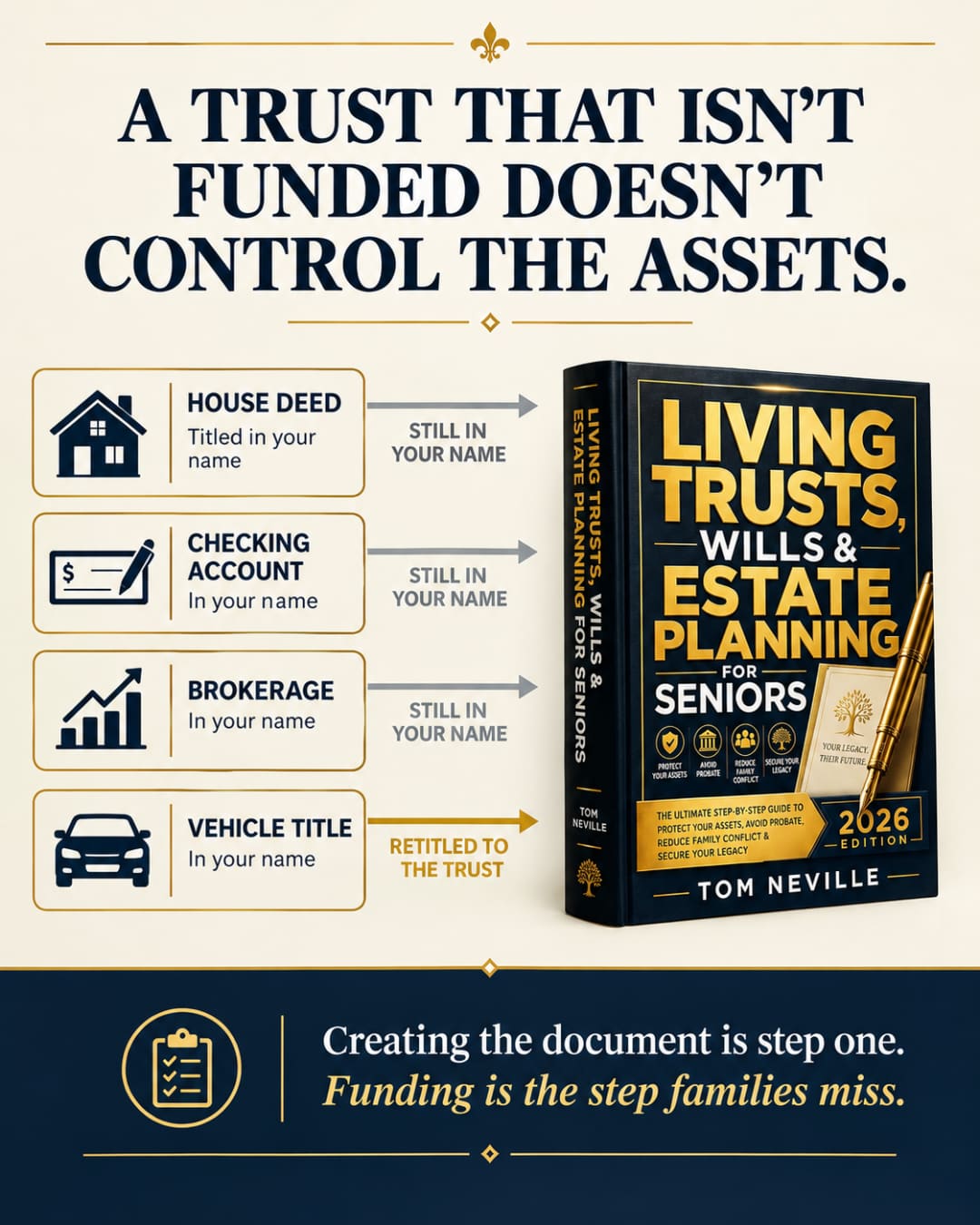
One important mechanism has a name: trust funding. It is the part that connects a signed legal arrangement to the assets it is supposed to hold. Skip it and the trust is hollow.
A living trust doesn’t automatically reach out and grab your house, your bank accounts, or your brokerage. Those assets have to be titled or assigned into the trust. Skip that — or do it for some assets and not others — and you can end up with a beautifully drafted trust that doesn’t actually control the property you thought it did. The will might then have to pick up the leftovers. Probate, delays, and confusion can show up anyway — and the money leaves the family.
Attorneys who have handled these cases for decades put the number of trusts that are never properly funded as high as 90%. One estate planning attorney with nearly 20 years of experience said he has never sat down with a trust-holder (outside his own clients) whose trust was fully funded. In multiple practices, a large share of living trusts failed to keep the estate out of probate, with incomplete asset transfers as the leading cause.
That’s not a scare story. It’s the mechanical difference between having a trust and having a funded trust. On a $500,000 estate, probate costs commonly run 3–8% — $15,000 to $40,000 that never needed to leave the family. In California, statutory fees alone on a $1 million estate can hit roughly $46,000 before court costs. That money stays in the family only if the funding was done.
This can matter years after signing, too. A refinance, a new bank account, an inheritance, or a change in ownership can alter the picture. A plain-English guide that covers funding alongside wills and beneficiary designations can help you understand which records deserve a closer look — and which questions to take to your attorney or financial institution before another change locks in the problem.
The details that quietly override your documents — and trigger the probate you paid to avoid

An outdated beneficiary on a retirement account. A POD designation that sends funds somewhere different from the trust. A house jointly owned in a way that bypasses the will. Life insurance that still names someone you would not choose today. Even a pour-over will can require assets left outside the trust to go through probate before they reach it. None of these details is obvious just from seeing a signed folder — until the family is stuck cleaning it up.
Those mismatches can turn into extra paperwork, delays, expense, and difficult decisions for a spouse or adult children. The troubling part is how ordinary each detail looks until someone has to act on it — and by then the money is already leaking out in fees and time.
What the 2026 guide actually shows you — so you can close the gaps before they cost real money

At this point, you do not necessarily need to start your estate plan over. You need to understand what was supposed to happen, what records can confirm it, and what questions deserve professional attention. That is the purpose of the 3-in-1 guide Living Trusts, Wills & Estate Planning for Seniors: to explain the moving parts in plain English instead of asking you to trust a folder you cannot decipher.
Here is the practical difference between simply reading about a trust and knowing what to review:
- Funding: understand why signing and transferring appropriate assets are different steps — and why most people stop halfway.
- Ownership: recognize why the house deed and account registrations matter — and how they can override the trust.
- Beneficiaries: see how retirement and insurance instructions can operate outside a will or trust — and send money somewhere you never intended.
- Your next conversation: organize questions about what was completed, what changed, and what needs qualified review so you stop guessing and start fixing.
1. The house: What name or trust is actually shown on the recorded deed?
2. The accounts: Which assets have separate ownership or beneficiary instructions that can override the trust?
3. The follow-through: What changed since the documents were signed — and was the funding finished?
Illustrative questions for understanding the topic; not reproduced pages or individualized legal advice.
You receive a physical 3-in-1 book with the Estate Planning Forms Pack, “Avoid Probate” Quick-Start, and Family Emergency Binder — plus the audiobook and digital PDF. Those are concrete resources for understanding the subject and organizing your information so the gaps stop costing you. Paperback kit: $59.99. Hardcover kit: $79.99. Free shipping.
The guide does not examine your personal deed, validate your trust, or replace legal advice. It gives you the vocabulary and the organizing tools to ask better questions — so if something needs professional correction, you can discuss the actual issue instead of guessing and leaving money on the table.
What readers are saying after they checked the funding
“Clear, practical, and finally explained how a will, a trust, and beneficiary forms are supposed to relate. Made the folder in my drawer feel less mysterious — and showed me the funding step I never knew was missing.”
Margaret K., Austin
“I already had documents from an attorney. This helped me understand what I signed and which questions to ask next — without talking down to me. Wish I’d had it before we spent the money.”
David R., Cleveland
“The funding chapter and the forms pack were the useful part for me. Well organized and easier to sit with than the original paperwork. We caught two accounts that were never moved.”
Linda P., Portland
If you already have documents, the next move is not “start over.” It is to close the funding gaps before they cost your family.
It is to understand what the documents say, how the assets are owned, and where the unanswered questions are. That turns a vague worry into something you can actually review — and fix — before probate takes its cut.
- Signed papers are a start, not a finish line. Up to 90% of trusts never get fully funded.
- Property titles and beneficiary designations may follow different instructions than the ones you assumed — and override the trust.
- The guide helps explain those moving parts and organize the questions worth asking next so the money stays with the family.
See what is included in the 2026 guide, then decide whether it is the right tool to help you understand — and complete — the plan you already paid for.